From separate solutions to a unified digital platform for two destinations
- CLIENT
-
- Terme Olimija
- Slovenia
- Terme Tuhelj
- Croatia
- YEAR OF IMPLEMENTATION
-
- 2013-present
Project in numbers
Compared to the same period in 2025, the number of registered users with confirmed GDPR consent and enrollment in the loyalty program increased by 87%. The result points to a high level of guest engagement with Terme Olimia’s digital ecosystem.
Compared to the same period in 2025, sales of gift vouchers and tickets increased by 20%. The growth points to the rising importance of the digital sales channel and a successful user experience in the online purchase.
Approximately 80% of guests use online check-in. The high adoption rate shows the service has become an established part of the digital user journey.
Challenge
A digital ecosystem that outgrew its original design
Over the years, the digital ecosystem expanded with new features, integrations, and business processes. Business logic spread across the content management system and several separate solutions, and some connections to external systems were duplicated. As the system grew, the limitations of the existing architecture and infrastructure became more pronounced. It was not always possible to develop, test, and deploy individual parts separately; scaling required manual interventions, and monitoring was neither centralized nor supported by alerting rules.
The challenge, therefore, was not only to move the infrastructure to the cloud, but to split the system into separate, controlled, independently deployable parts and thereby create a stronger foundation for the further development of both destinations.
Our solutions
Four areas, one platform
We built a platform that connects four key areas of digital operations:
accommodation and reservations with packages, rate plans, and online check-in,
an online store with tickets, gift vouchers, promo codes, and seasonal offers,
the guest profile with a loyalty program and
enquiries, dynamic forms, and occupancy.
The platform integrates with back-end systems including PHOBS, the hotel system, CRM, payment gateways, the fiscal cash register, and the existing CMS, i.e., Umbraco. As a result, enquiries, forms, and occupancy data are handled within the same platform and consolidated in one place.
One platform for both destinations
Terme Olimia and Terme Tuhelj now use a shared platform that connects both destinations across two countries and supports six languages. The production environment is built on managed Microsoft Azure services, without virtual servers that would need to be maintained.
Business modules are clearly separated, so they can be developed and deployed more independently, while the infrastructure enables controlled operation and automatically adapts to load. The transition to the new platform was gradual, domain by domain, with the old and new environments running in parallel for a while. The decoupled design limits the impact of any potential error to an individual part of the system; for example, an issue in the online store does not affect the reservations component.
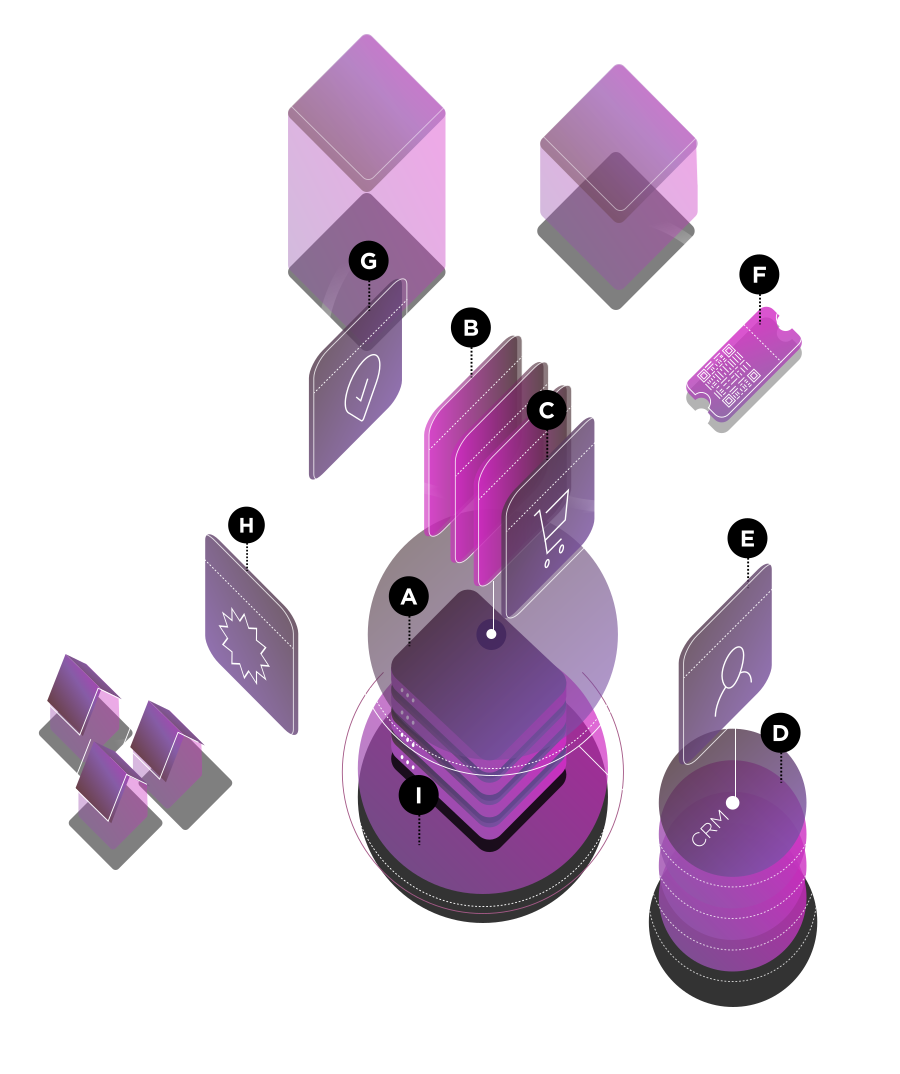
- A Web platform for Terme Olimija and Terme Tuhelj
- B New website
- C Online store
- D Integration with back-end systems (DAR, CRM ...)
- E Customer data repository - loyalty program
- F Digital tickets with QR codes
- G Online check-in
- H System for generating promotional codes for private accommodation guests
- I Microsoft Azure infrastructure
Reservations stay on the website
Instead of the embedded PHOBS interface, we integrated via the API. Availability and prices come directly from the reservation system, while the content and presentation remain on the website of each destination. This way, the Terme retain control over how the offer is presented and can enrich live data from PHOBS with their own descriptions, photos, galleries, and other content. Guests can complete the entire reservation process within the same website.
Sales, guest profile, and loyalty program in the same ecosystem
The platform supports sales of tickets and gift vouchers, the use of promo codes, and an online cash register. At the same time, it connects the guest profile for both destinations with the loyalty program and the mobile app. User and purchase data remain within the client’s digital ecosystem. In sales, the platform applies line-item fiscalization and the rules of both countries, which makes it possible to combine multiple services from different destinations in a single purchase, while the guest sees one purchase and one total price. Paid purchases are designed so that, in the event of a disruption, processing is automatically retried. Member prices and promo codes are included directly in the purchase flow, and partner codes can unlock special offers. A logged-in member sees their price already during the purchase decision.

Our collaboration over time
Start of collaboration
Data strategy
Online store and check-in
Online store enhancements
Aqualuna and the loyalty program
Inclusion of local accommodations
Revamp
Results
Terme Olimia and Terme Tuhelj now use a shared digital platform in which individual business modules are clearly separated and can be developed, tested, and deployed more independently. The infrastructure automatically adapts to load, the system signals disruptions with alerts, and the database can be restored to a selected point in time. A separate test environment uses anonymized data, so guests’ personal data remain in the production environment.
The new architecture has also streamlined the further development of digital services. Business logic is no longer tied to the content system, individual integrations have clearly defined responsibilities, and changes in one part of the system are less dependent on other parts.
Scope of our work
-
Innovation and Technology Consulting
- Digital and application architecture design
- Business domain design
- Integration and data flow design
-
Development of web and mobile applications
- Website development
- Booking flow development
- Online store development
- Guest profile and loyalty program development
- Online check-in development
- Inquiry and dynamic form development
-
Cloud, infrastructure and security
- Design and setup of the Microsoft Azure environment
- Migration of business-critical systems
- Implementation of security mechanisms and secure access
- Automatic scaling
- Centralized monitoring and alerting
- Setup of a separate test environment
Integrations
-
- Integration with PHOBS
- Integration with the hotel system
- Integration with CRM
- Integration with payment gateways
- Integration with the fiscalization system